

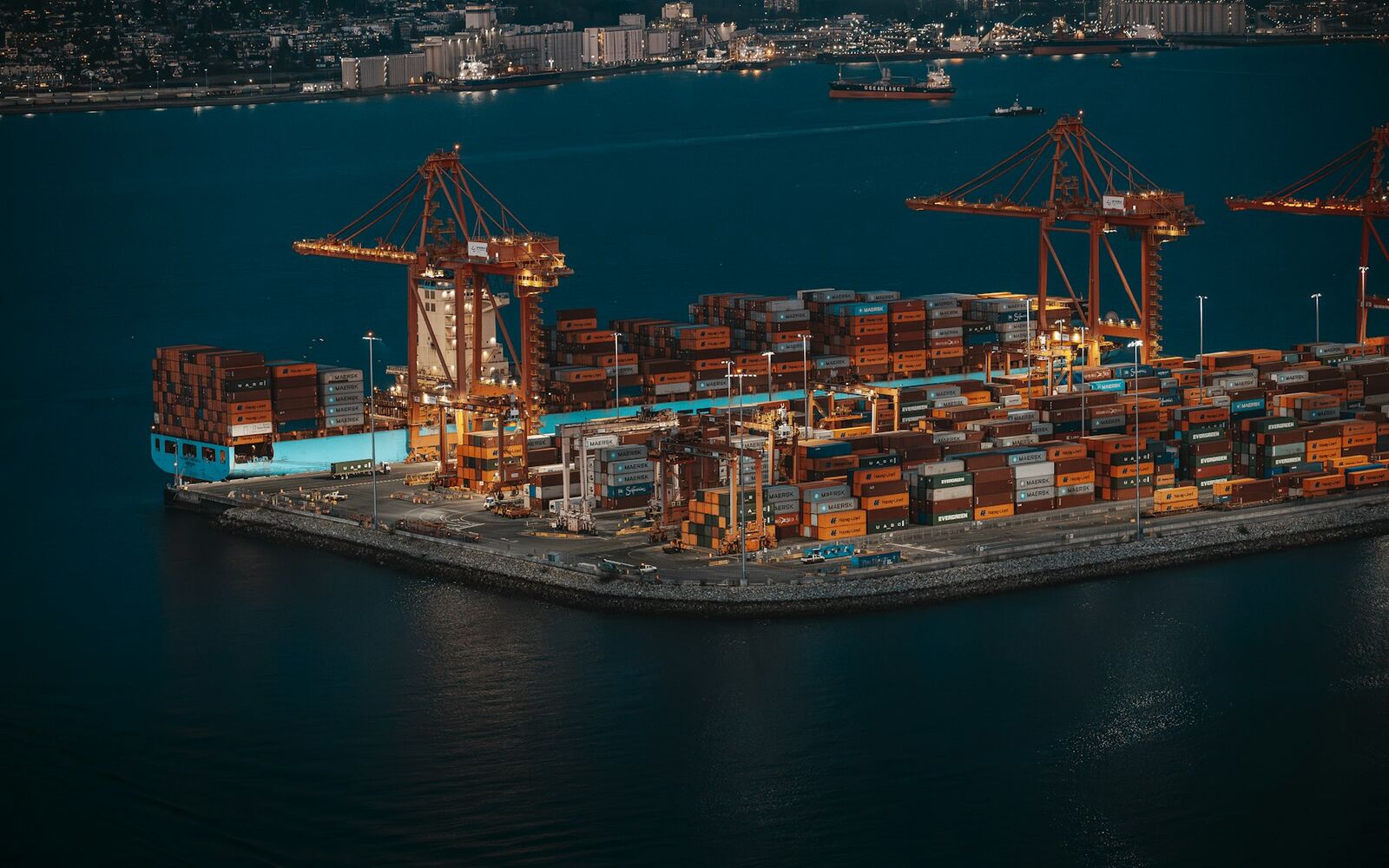
Container shipping rates are among the most decisive line items in the budget of any company engaged in international trade. The cost of moving a container from Turkey to the Far East, the Americas, Africa or European ports can change from week to week depending on the route, container type, season, fuel prices and vessel capacity. This volatility is especially confusing for companies exporting by sea for the first time. From our Gebze base, Özd Global arranges container shipments worldwide through the ports of Ambarli, Izmit Bay and Mersin. In this guide, we explain how container shipping rates are built, which components they contain and how to keep costs under control.

How Container Shipping Rates Are Built
The total cost of a container shipment is never a single freight figure. The price typically consists of these main components:
- Ocean freight: The base charge the carrier asks for port-to-port transport.
- Bunker adjustment factor (BAF): A fuel component updated periodically in line with oil prices.
- Terminal handling charges (THC): Fees paid at the origin and destination ports for handling the container.
- Documentation and bill of lading fees: Costs for issuing the bill of lading, manifest and declarations.
- Pre-carriage and on-carriage: Road transport from the factory to the port and from the destination port to the consignee.
- Customs brokerage: The export or import declaration and brokerage service.
- Insurance: A cargo insurance premium calculated on the value of the goods.
When comparing offers, asking for an "all-in" rate that covers every component prevents surprise charges later.
Key Factors That Influence the Price
Route and Distance
Freight from Turkey to Mediterranean and Northern European ports is generally lower than to the Far East or South America. Distance is not the only driver, though; competition on the lane and available vessel capacity also shape the rate.
Container Type and Size
20-foot standard, 40-foot standard and 40-foot high cube containers are priced differently. Special equipment such as reefer (refrigerated), open top and flat rack containers carries higher freight because of limited availability and the extra energy and handling involved.
Season and Supply-Demand Balance
Demand on Far East lanes rises ahead of the New Year and Chinese New Year, and carriers may apply a peak season surcharge (PSS). On European lanes, demand tends to climb in summer.
Fuel and Exchange Rates
Ocean freight is mostly quoted in US dollars. Rising fuel prices feed into the BAF, while currency movements affect port and customs charges paid in local currency.
Tip: For companies with regular shipments, three- or six-month fixed-rate agreements (contract freight) provide protection against volatility. When spot market rates are low, spot bookings can be more attractive, so both options should be weighed together.
Example Cost Structure
The table below shows the components that make up the total cost of an export container and their approximate share. The figures are proportional examples; real values vary by route and period.
| Cost Item | Approximate Share of Total | Volatility |
|---|---|---|
| Ocean freight + BAF | 55-70% | High (changes weekly) |
| Terminal handling (THC) | 10-15% | Low (fixed tariff) |
| Pre-carriage by road | 8-15% | Medium (fuel and distance) |
| Customs and documents | 3-6% | Low |
| Insurance | 1-3% | Depends on cargo value |
Knowing this structure helps you see where there is room to negotiate. For current container shipping rates, submit your shipment details through our sea freight page.

FCL or LCL: Which Is More Economical?
If your cargo fills a container, full container load (FCL) is always cheaper per unit. For shipments under about 15 cubic metres, less than container load (LCL) lets you pay only for the cubic metres you use. However, LCL involves deconsolidation charges at the destination port and longer transit times. As a rule of thumb, a 20-foot FCL should be considered for cargo of 15-18 cubic metres or more.
Hidden Costs to Watch
Container shipping rates may not stop at what is written on the quotation. Frequently overlooked items include:
- Demurrage and detention: Daily penalties if the container exceeds its free time at the port or at the consignee.
- Port storage: Yard fees for containers whose customs processing is delayed.
- Weighing (VGM) fee: The cost of weighing to declare the container's verified gross mass.
- Inspection costs: Charges for opening and resealing the container when customs calls for a physical examination.
- Exchange rate differences: Currency movements between the quotation date and the payment date.
Our customs clearance team minimises the risk of demurrage and port storage by preparing complete documentation.
Strategies to Reduce Cost
- Consolidate shipments to move from LCL to FCL.
- Plan around vessel cut-off dates to avoid urgent surcharges.
- Optimise the stuffing plan to use the full container volume.
- Compare alternative ports of departure (Izmit Bay, Ambarli, Mersin); pre-carriage cost can make a real difference.
- Consolidate goods from several suppliers into one container at our Gebze warehouse.
Özd Global uses Gebze's proximity to the Izmit Bay ports to reduce pre-carriage expense and keep the overall price competitive.
Frequently Asked Questions
Why do container shipping rates change so often?
Ocean freight reacts instantly to global supply and demand, vessel capacity, fuel prices and geopolitical events. Carriers typically update their tariffs every two weeks or monthly, which is why quotations usually come with a short validity period.
What is the price difference between a 20-foot and a 40-foot container?
A 40-foot container does not cost twice as much as a 20-foot; the freight is usually 30-60 percent higher. For bulky cargo, choosing a 40-foot or 40-foot high cube therefore cuts the cost per cubic metre significantly.
Does the rate I received include customs clearance?
That depends on the scope of the quotation. Some offers cover only port-to-port freight, while door-to-door offers include pre-carriage, customs clearance and delivery. Özd Global provides itemised quotations and states clearly which services are included.
For a current, transparent price on your container shipment, share the origin, destination port and volume details via our contact page or call +90 551 462 41 34. The Özd Global team will present the most economical and reliable sea freight solution for your cargo.