

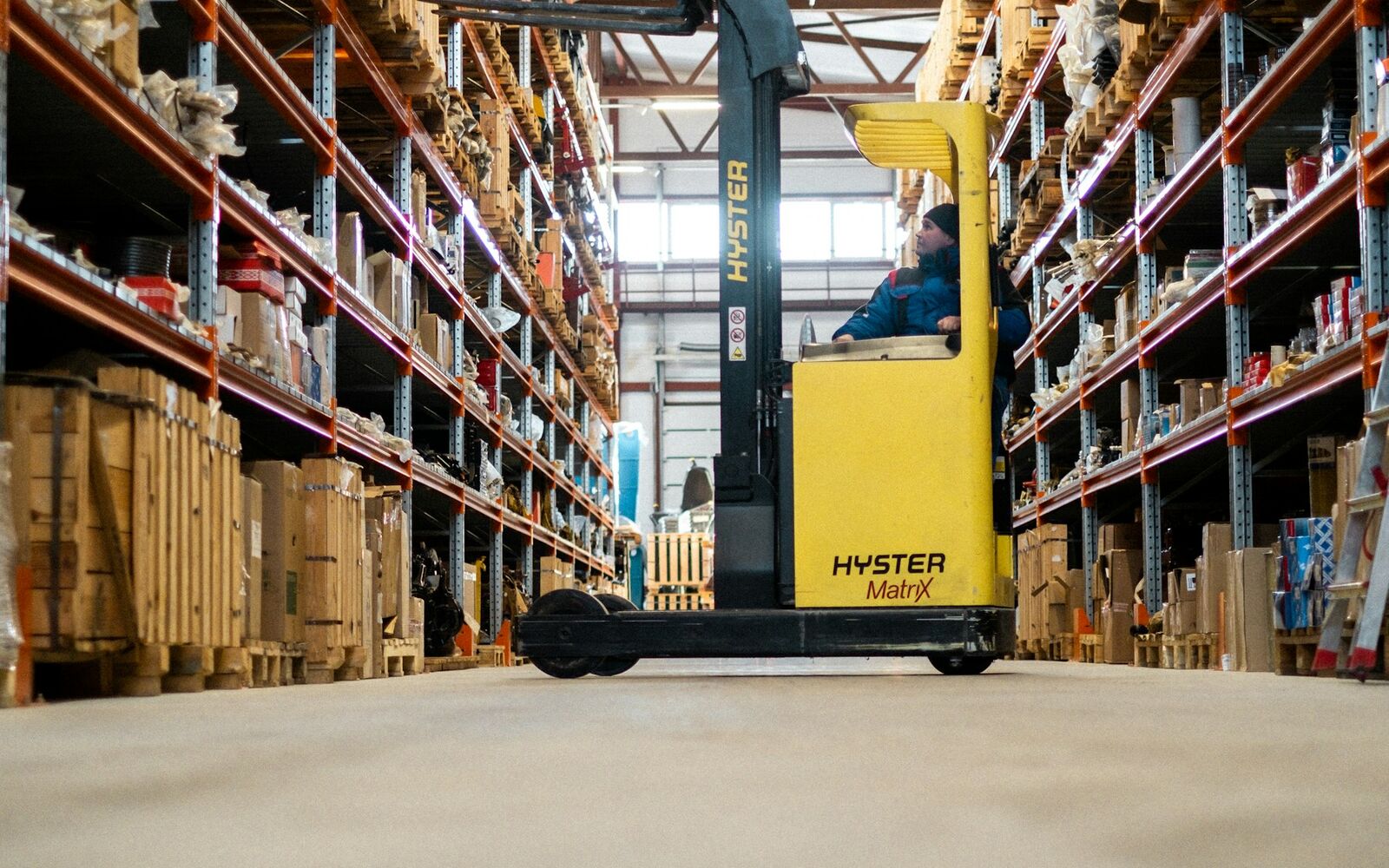
For an online brand, the hardest moment is when orders start to grow. Preparing ten parcels a day from your own office is manageable; at a hundred or a thousand, stock counting, packing, shipping labels and returns start to consume the whole team's time. E-commerce fulfillment means handing that entire operation to a specialist logistics partner: your products are held in the partner's warehouse, orders are picked, packed and shipped as they come in, and returns are processed at the same centre. This article explains how e-commerce fulfillment works, what it delivers, how the pricing is structured and what to look for in a partner. Özd Global provides fulfillment services for both domestic and international orders from its warehousing and distribution centre in Gebze.

What Is E-Commerce Fulfillment?
Fulfillment literally means completing an order. In e-commerce it covers the whole physical process from the moment a customer clicks "buy" until the parcel reaches their door. The process has four main parts:
- Inbound and storage: Products arrive at the fulfillment centre, are counted, barcoded and put away on racks.
- Picking and packing: When an order lands in the system, the product is picked, verified and packed in brand-appropriate packaging.
- Shipping and delivery: The parcel is handed to the most suitable carrier and the tracking number is sent to the customer.
- Returns management: Returned items are inspected and, where suitable, put back into stock.
A brand using a fulfillment service rents no warehouse, employs no warehouse staff and negotiates no separate carrier contracts. The whole operation runs under one agreement and one system.
What Fulfillment Delivers for a Brand
| Topic | In-house operation | With a fulfillment partner |
|---|---|---|
| Warehouse and staff | Fixed cost, short-handed in peak season | Variable cost, scales with the season |
| Carrier rates | Low volume, high unit price | Pooled volume, better rates |
| Order processing time | Depends on team workload | Same-day dispatch as standard |
| Error rate | Manual checks | Barcode-verified WMS picking |
| Focus | Operations eat your time | Focus on product, marketing and sales |
| Growth | New investment at every step | Automatic scaling as volume grows |
The most valuable gain is the founders' and team's time. Hours spent at the packing bench, redirected to product development and marketing, accelerate growth.
The Fulfillment Process Step by Step
Integration
The brand connects its e-commerce platform (own web shop, marketplace stores) to the partner's warehouse management system. Orders flow into the warehouse automatically and stock levels are written back to the platforms. This step is the most critical for an error-free operation.
Inbound Stock
The brand ships its products to the fulfillment centre. Items are counted, any damage is recorded, barcodes are applied and goods are placed at their rack addresses. Stock becomes visible in the system immediately.
Order Processing
When an order arrives, the WMS generates a pick list; the operator collects the item, verifies it by barcode and packs it with the brand's chosen packaging and inserts (thank-you card, leaflet, sample). The shipping label is printed and the parcel moves to the dispatch area.
Shipping and Tracking
Parcels are handed to carriers daily. Tracking details are passed automatically to the e-commerce platform and the customer. For international orders, the Özd Global air freight team consolidates shipments and flies them to the target market.
Returns Processing
Returned parcels are opened and the product inspected; sellable items go back into stock, others are held separately and the brand is informed.

E-Commerce Fulfillment Cost Structure
Fulfillment fees are usually made up of these components:
- Receiving fee: Counting and put-away of inbound goods, per pallet or carton.
- Storage fee: Rack space used, charged monthly per pallet, bin or cubic metre.
- Pick and pack fee per order: Typically a flat fee per order plus a small amount per additional item.
- Packaging materials: Standard boxes and fill may be included; branded packaging is priced separately.
- Carrier charges: Passed on at the partner's negotiated rates.
- Returns processing fee: Inspection and restocking per returned item.
Rates vary with order volume, product dimensions and additional services. As monthly order counts rise, the unit cost per order usually falls. For a firm quote, share your average order count, SKU count and product dimensions.
Tip: Before sending stock to your fulfillment partner, prepare complete barcode, dimension and weight data for every SKU. Incomplete product master data is the most common cause of delays at receiving and incorrect carrier charges.
Choosing the Right Fulfillment Partner
- Location: The warehouse should be close to carrier hubs and export gateways. Gebze, on the Marmara industrial and port corridor, offers exactly that.
- Integration capability: Ready connectors for the e-commerce platform and marketplaces you use.
- Same-day dispatch rate: Orders received before a cut-off time should ship the same day as standard.
- Accuracy metrics: Order error rate and stock accuracy reported regularly.
- International capability: If you sell cross-border, customs clearance and international parcel experience are essential.
- Peak capacity: Space and staff to absorb volume spikes during campaign periods.
- Transparent reporting: Real-time portal access to stock, order and returns data.
To explore the fulfillment scope of the Özd Global warehousing and distribution service or share your order profile, reach us via our contact page or call +90 551 462 41 34.
Frequently Asked Questions
Is there a minimum order volume for e-commerce fulfillment? Many providers apply a minimum monthly order count or invoice value; the threshold varies by provider. Entry packages for low volumes may be available for brands that are just starting out.
Can I use my own branded packaging? Yes. Branded boxes, ribbons, cards and samples are stocked at the fulfillment centre and added to each order according to the rules you define.
Can I see my stock in real time? With WMS-based fulfillment, stock levels, order status and returns are visible in real time through a customer portal and are also synced automatically to your e-commerce platform.
Delivering orders accurately and quickly is your brand's most visible promise. At our Gebze centre, Özd Global runs your e-commerce fulfillment operation from inbound stock to returns management under one roof; share your order profile and let us build the right fulfillment model together.