

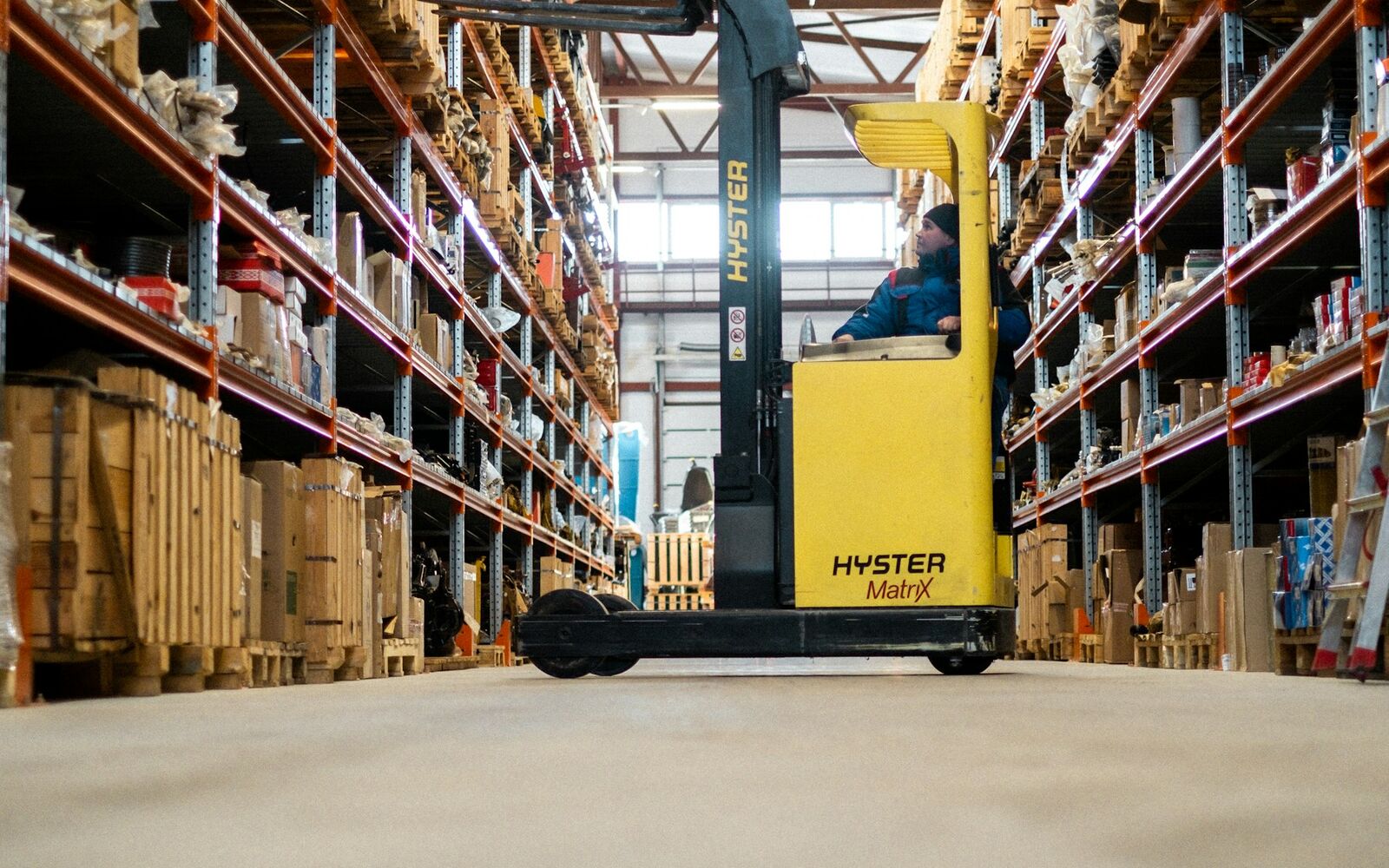
Warehouse security and fire safety together form the set of measures that protect a logistics facility against its two most destructive risks, and they are as fundamental to the building as the racking or the forklifts. The value of the goods inside a warehouse often exceeds the value of the building itself; a single fire or an organised theft can wipe out years of commercial relationships and customer trust overnight. In this article, Özd Global walks through the core components of fire protection, the physical and digital measures against theft, the risks that originate with staff, and why insurance and risk management must be handled together.

Where Does Fire Risk in a Warehouse Come From?
Most warehouse fires start with faulty electrical installations, forklift batteries at charging stations, hot work such as welding or cutting carried out without precautions, uncontrolled build-up of flammable packaging, and human causes such as smoking. In high-bay warehouses a fire spreads vertically at great speed, which is why automatic systems that react in the first minutes are vital.
The type of goods also defines the risk. Textiles, paper, plastic-wrapped products, aerosols and chemicals fall into different fire classes and require different suppression methods. When laying out a warehouse, where each product is stored should be decided according to these classes.
The Core Components of Fire Safety
In a modern warehouse, fire protection is built from complementary layers:
- Detection: Smoke and heat detectors, in-rack sensors and a fire alarm panel monitored around the clock.
- Automatic suppression: Ceiling and, where needed, in-rack sprinklers; foam or gas systems depending on the product type.
- Fire compartments: Fire walls and fire doors that divide the building and limit spread.
- Manual equipment: Extinguishers of the correct class, hose reels and a hydrant line.
- Evacuation infrastructure: Emergency exit signage, emergency lighting and designated assembly points.
- Maintenance and drills: Periodic system inspection and at least two evacuation drills a year with staff.
Forklift Charging Areas and Electrics
Hydrogen released during battery charging can create an explosive atmosphere. Charging areas must be well ventilated, kept away from combustible material, and electrical panels should be checked regularly with a thermal camera. At Özd Global warehouses, charging stations are located in sections separated from the storage area.
Physical and Digital Measures Against Theft
Warehouse theft is not limited to attacks from outside; a significant share of incidents involves inside information or access. Measures must therefore cover both perimeter security and internal processes.
| Layer | Measure | Purpose |
|---|---|---|
| Perimeter | Fencing, lighting, vehicle barriers, plate recognition | Deter unauthorised entry |
| Building | Alarms, door and dock sensors, steel doors | Detect forced entry |
| Floor | CCTV, recording retention, blind-spot analysis | Record and prove incidents |
| Access | Card entry, visitor log, permission levels | Know who went where |
| Process | Cycle counts, dual sign-off, random checks, driver verification | Prevent internal loss |
Tip: Create a separate locked, camera-covered cage area inside the warehouse for high-value goods. Restrict access to a few authorised people and log every entry and exit. This simple practice cuts shrinkage noticeably.
Fake Carriers and Document Fraud
One of the fastest-growing risks in recent years is the fake carrier that poses as a genuine haulier, collects the load and disappears. For every load leaving the warehouse, the driver's identity, the vehicle plate and the order number must be verified against the system; no vehicle that fails to match should be loaded. In our road freight operations, vehicle and driver details are sent to the warehouse before loading, and the dock supervisor does not start loading until verification is complete.

People, Training and a Security Culture
Even the most advanced system is only as effective as the people using it. Every new employee should be trained in fire, evacuation and security procedures before starting work, and the training should be refreshed at regular intervals. Start-of-shift checklists, confirmation of door and alarm status, clearly designated smoking areas and a simple channel for reporting suspicious situations form the foundation of a security culture. Özd Global trains all of its warehousing and distribution staff within this framework and keeps records of every drill.
Additional Obligations in Bonded Warehouses
In bonded warehouses and customs-controlled areas, security is a legal requirement, not just a commercial one. CCTV retention periods, entry and exit records and physical security standards are defined by regulation. Our customs clearance team helps clients prepare for the inspections carried out in these areas.
Insurance and Risk Management
Security measures do not replace insurance, but they directly affect premiums and the claims process. Sprinkler systems, fire compartments and monitored alarms are the main factors insurers consider when calculating premiums. Declaring the correct value of stored goods, treating stock insurance and building insurance separately, and spelling out the warehouse operator's liability limits in the contract are the non-negotiables of risk management.
Frequently Asked Questions
Is a sprinkler system mandatory in a warehouse? For warehouses above certain size and occupancy thresholds, fire regulations make it mandatory; even in smaller facilities insurers usually require it. For high-bay storage, in-rack sprinklers should be assessed separately.
What is the weakest link in warehouse theft? In most incidents the weak link is not the technology but the process: an unverified driver, an unescorted visitor, staff without defined permission levels. Access and counting procedures deserve the same regular audits as physical measures.
Who is liable for damage in outsourced warehousing? It depends on the contract terms. Typically the warehouse operator is liable for negligent damage during handling and storage, while stock insurance is taken out by the owner of the goods. Liability limits and insurance cover must always be in writing.
Storing your goods in a secure environment should weigh as heavily as price when you choose a logistics partner. To learn more about the fire and security infrastructure at Özd Global's warehouses in Gebze, visit our contact page or call +90 551 462 41 34.