

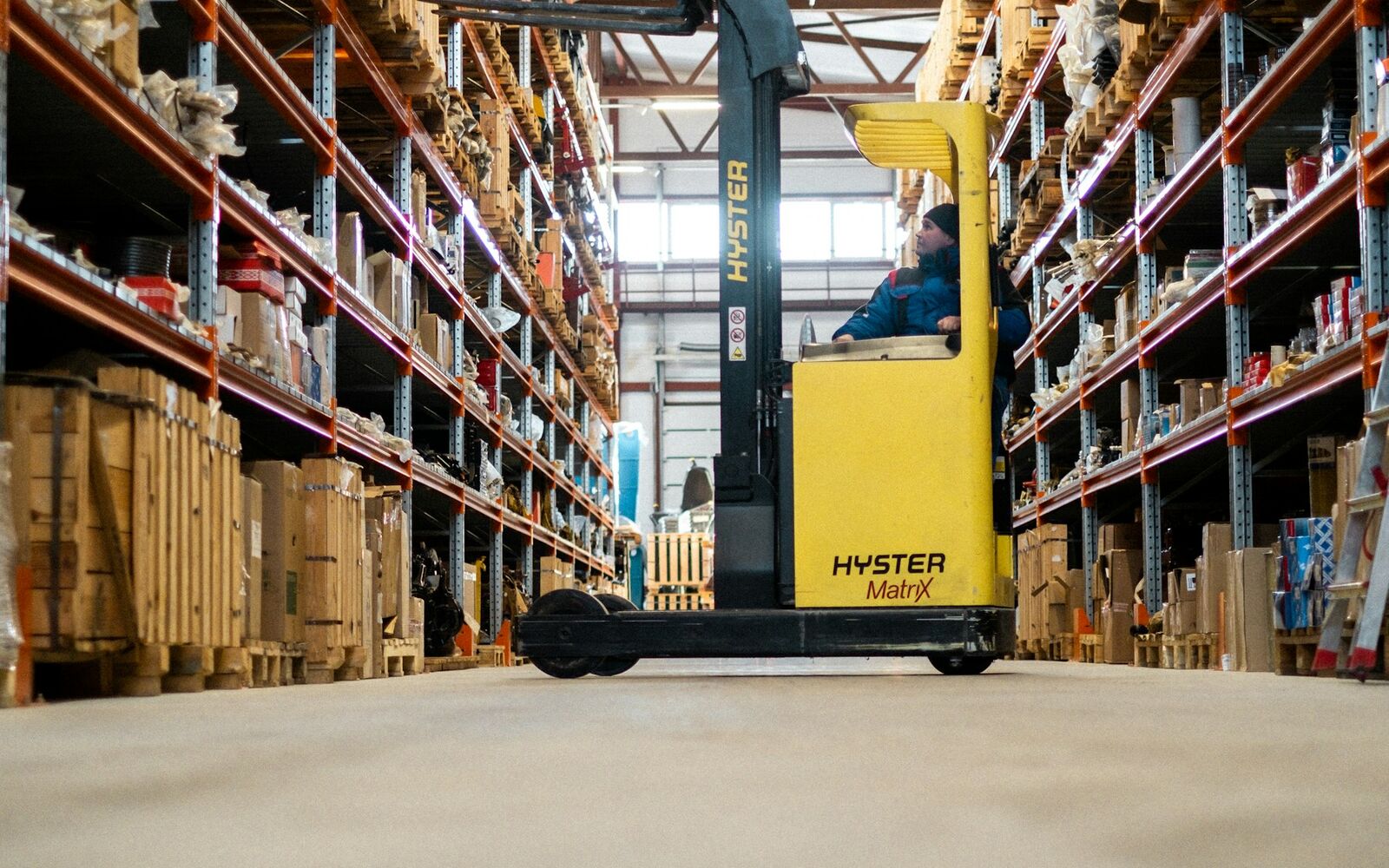
Whether you are a manufacturer, an importer or an e-commerce business, where and how you hold your stock has a direct effect on profitability. Running your own warehouse brings high fixed costs; outsourcing gives you flexibility but requires you to understand how the pricing works. When it comes to warehousing costs, there is no single market tariff; prices are shaped by warehouse type, location, volume, handling intensity and added services. This article breaks down the components of warehousing costs, the common pricing models, ways to reduce your bill and the questions to ask when comparing quotes. Özd Global's warehousing and distribution centre in Gebze offers transparent pricing to businesses along the Marmara industrial and port corridor.

What Makes Up Warehousing Costs?
A warehousing quote is usually built from several main components. Understanding each one separately lets you compare offers on equal terms.
Storage Fee
The most basic element. It is charged per pallet per day or month, per square metre per month, or per cubic metre. Pallet-based pricing is common in racked warehouses, square-metre pricing in block-stacked facilities.
Handling Fee
Receiving goods, put-away, order picking, packing and dispatch are charged separately, typically as an in-and-out fee per pallet or a picking fee per carton or unit.
Value-Added Services
Labelling, barcoding, kitting, quality checks, repacking and returns processing are priced by labour time or by number of operations.
Systems and Reporting
Use of a warehouse management system (WMS), stock reports and integrations are included by some providers and billed separately by others.
Pricing Models
| Model | How it is calculated | Best suited to |
|---|---|---|
| Per pallet | Pallet per day/month + in-and-out fees | Businesses holding standard palletised stock |
| Per square metre | Rented area x monthly unit rate | Irregular or block-stacked goods |
| Per cubic metre | Volume used x unit rate | Light but bulky products |
| Per transaction | Pick and pack fee per order or carton | E-commerce and high order counts |
| Fixed contract | Flat monthly fee for a defined space and throughput | Predictable, steady stock levels |
For most businesses the best structure is a hybrid: storage charged per pallet or square metre and handling charged per transaction. Fixed contracts lower the unit cost at high volume but can leave you paying for idle capacity in slow months.
Factors That Influence Warehousing Costs
Receiving very different quotes for the same pallet from two warehouses is normal. The difference usually comes down to:
- Location: Facilities on the port and motorway corridor, such as Gebze, Dilovası and the wider Kocaeli area, offer a better balance of cost and access than inner-city warehouses.
- Warehouse type: Bonded, cold-chain and hazardous goods warehouses cost more than standard dry storage.
- Term and volume: Longer commitments and higher volumes reduce the unit rate.
- Product characteristics: Fragile, high-value or temperature-sensitive goods need extra security and infrastructure.
- Handling intensity: Fast-moving stock consumes more labour than stock that sits for months.
- Insurance: A premium based on stock value may be included or quoted separately.
- Season: Occupancy rises around holidays and campaign periods, and rates can follow.

Your Own Warehouse or Outsourcing?
Operating your own warehouse means rent, staff, forklifts, racking, insurance, security, software and maintenance, and those costs continue even when stock levels fall. Outsourced warehousing ties the cost to the space and transactions you actually use, turning a fixed cost into a variable one.
As a rule of thumb, outsourcing is more economical for businesses with fluctuating stock, distribution to several markets, or where warehousing is not the core activity. For very high, stable volumes with specialised infrastructure needs, building your own facility can become attractive over time. See the Özd Global warehousing and distribution page for the scope of our service.
Tip: When comparing quotes, do not stop at the storage rate per pallet. Ask for a total monthly cost scenario that includes in-and-out, picking, packing and reporting fees. The lowest storage rate is rarely the lowest total cost.
How to Reduce Warehousing Costs
- Increase stock turnover: Cutting slow-moving lines reduces storage fees directly.
- Stick to pallet standards: Standard-sized, well-stacked pallets use rack space efficiently and speed up handling.
- Consolidate dispatches: Planned, combined outbound movements cost less than frequent small ones.
- Choose the right location: A warehouse close to customs, the port and your customers lowers transport cost and total logistics spend. Our Gebze centre offers that advantage for road freight and port connections.
- Use a bonded warehouse: For imported goods, deferring duties until the point of sale eases cash flow; our customs clearance team supports the process.
Questions to Ask Before You Sign
- Is storage charged per pallet, square metre or cubic metre, and is there a minimum fee?
- How are in-and-out and picking fees calculated?
- Is insurance included, and up to what value?
- Is WMS access and stock reporting provided?
- What are the contract term and termination conditions?
- Is capacity guaranteed during seasonal peaks?
With clear answers to these questions, you can compare warehousing costs realistically. To share your stock profile with Özd Global, use our contact page or call +90 551 462 41 34.
Frequently Asked Questions
Are warehousing costs calculated monthly or daily? Both are common. Long-term stock is usually charged per pallet or square metre per month, while short-term, fast-moving stock is charged per pallet per day. The contract should state clearly which model applies.
Is there a minimum volume requirement? Many warehouses apply a minimum pallet count or a minimum monthly invoice. Transaction-based models suit smaller businesses better; the details vary by provider.
Does the price include transport? Usually not. Inbound and outbound transport are quoted separately, although buying warehousing and transport from the same provider often lowers the total cost.
Keeping warehousing costs under control comes down to choosing the right pricing model and the right location. At our Gebze facility, Özd Global offers transparent and predictable warehousing costs tailored to your stock profile; tell us what you need and we will prepare a quote built around it.